Chinese
 English
 français
 Deutsch
 italiano
 português
 Nederlands
 日本語
日本語 한국의
한국의




- Informe del mercado de baterías de energía de China H1 2026: seis tendencias que reconfiguran la demanda de equipos de baterías
- Guía de configuración de laboratorio de baterías de estado sólido llave en mano
- Materiales conductores para baterías de litio: guía comparativa entre CNT y grafeno
- Guía paso a paso para asociarse con un desarrollador de tecnología de baterías de iones de sodio en China
- Guía completa para implementar tecnología industrial de baterías de estado sólido en la fabricación
Cómo solucionar la sedimentación y aglomeración de la lechada de electrodos
Preparación de la suspensión del electrodo Es uno de los pasos más críticos, aunque subestimados, en la fabricación de baterías de iones de litio y de iones de sodio. Problemas como la sedimentación de partículas, la aglomeración, la mala uniformidad de la dispersión y la viscosidad inestable suelen originarse en la etapa de suspensión, pero sus consecuencias se propagan posteriormente en defectos de recubrimiento, inconsistencia de la capacidad y pérdida de rendimiento.
Este artículo explica sistemáticamente ¿Por qué se produce la sedimentación y aglomeración de lodos? , Cómo los parámetros clave del proceso, como la velocidad de mezcla y el nivel de vacío, influyen en la calidad de la pulpa , y Cómo seleccionar un mezclador de vacío adecuado desde una perspectiva de ingeniería El contenido está escrito para fabricantes de baterías, centros de I+D e ingenieros de líneas piloto que buscan una preparación de lodos estable, escalable y reproducible.
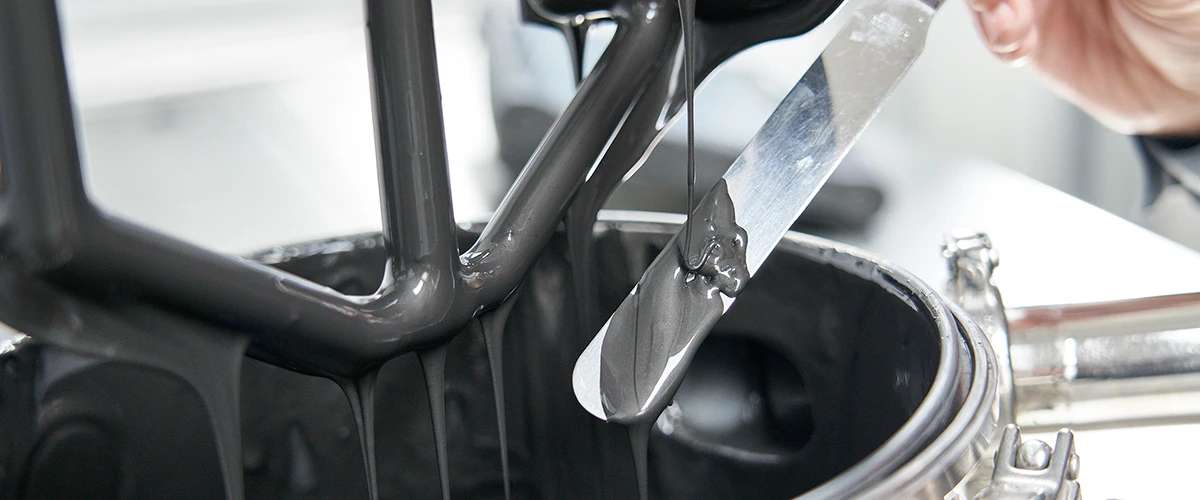
1. ¿Por qué las lechadas de electrodos se sedimentan y aglomeran durante la mezcla?
1.1 Sedimentación causada por diferencias de densidad e insuficiente She Arkansas
Las suspensiones de electrodos consisten en materiales sólidos de alta densidad (materiales activos, aditivos conductores) dispersos en fases líquidas de densidad relativamente baja (NMP o disolventes a base de agua). Los polvos típicos de cátodo y ánodo, como NCM, LFP, grafito, compuestos de silicio-grafito o carbono duro, tienen densidades varias veces superiores a las del sistema de disolventes.
Si el La fuerza cortante generada durante la mezcla es insuficiente Las fuerzas gravitacionales predominan sobre las fuerzas de suspensión, provocando la sedimentación gradual de partículas más pesadas. Este fenómeno se agrava en las siguientes condiciones:
- Formulaciones con alta carga de sólidos (>50–60 % en peso)
- Grandes volúmenes de lotes con circulación de flujo limitada
- Tiempos de permanencia prolongados entre los pasos del proceso
La sedimentación genera gradientes verticales de composición en la suspensión. La capa inferior presenta una concentración excesiva de sólidos, mientras que la capa superior se vuelve rica en aglutinantes y disolventes. Una vez formados, estos gradientes son difíciles de eliminar y afectan directamente la uniformidad del espesor del recubrimiento, la densidad de los electrodos y la consistencia electroquímica.
1.2 Aglomeración impulsada por la energía superficial y la formación de puentes aglutinantes
La aglomeración se origina a partir de la alta energía superficial de polvos finos Las partículas a escala nanométrica o micrométrica tienden a agruparse para minimizar la energía superficial total. En las suspensiones de baterías, esta tendencia natural se ve amplificada por factores relacionados con el proceso.
Las causas comunes incluyen:
- Alimentación rápida de polvo sin humectación previa suficiente
- El aglutinante se añadió demasiado pronto, lo que forma puentes de polímero localizados
- Esfuerzo cortante inadecuado para romper los grupos iniciales
Una vez formados los aglomerados, se comportan como grandes pseudopartículas resistentes a la dispersión. Estos grupos duros suelen sobrevivir a todo el proceso de mezcla y posteriormente aparecen como poros, vetas o anomalías de resistencia localizadas en los electrodos recubiertos.
1.3 El atrapamiento de aire como causa raíz oculta
El aire introducido durante la adición de polvo o la mezcla atmosférica a alta velocidad queda atrapado dentro de los grupos de partículas. Estas bolsas de aire impiden la penetración del disolvente y bloquean la humectación eficaz de las superficies internas de las partículas.
Sin desgasificación, el aire atrapado estabiliza los aglomerados y empeora la sedimentación. Por ello, las suspensiones mezcladas en condiciones atmosféricas suelen presentar una apariencia aceptable al principio, pero se degradan rápidamente durante el almacenamiento o el traslado.
2. ¿Cómo afectan la velocidad de mezcla y el nivel de vacío la finura y la estabilidad de la suspensión?
2.1 Velocidad de mezcla: control de la eficiencia de cizallamiento y dispersión
La velocidad de mezcla determina directamente la magnitud del esfuerzo cortante aplicado a los grupos de partículas. A medida que aumenta la velocidad de rotación:
- Los aglomerados experimentan fuerzas mecánicas más fuertes
- Los aditivos aglutinantes y conductores se distribuyen de forma más uniforme
- La eficiencia del contacto sólido-líquido mejora
Sin embargo, aumentar la velocidad por sí solo tiene limitaciones. Una velocidad excesiva en condiciones atmosféricas puede introducir aire nuevo, elevar la temperatura de la lechada y acelerar la degradación del aglutinante. Por lo tanto, la velocidad de mezcla debe optimizarse en lugar de maximizarse.
2.2 Nivel de vacío: mejora de la humectación y la desgasificación
El vacío modifica radicalmente el comportamiento de la suspensión. Bajo presión reducida, el aire atrapado se expande y escapa de la suspensión, permitiendo que el disolvente penetre con mayor eficacia en los grupos de partículas.
A niveles de alto vacío (normalmente de -0,08 a -0,095 MPa):
- Las burbujas de aire se eliminan rápidamente.
- La humectación del polvo se vuelve más completa
- El aglutinante penetra en los microporos dentro de los aglomerados.
Esto da como resultado una dispersión más fina, una menor fluctuación de la viscosidad aparente y una mejor estabilidad de la suspensión a largo plazo.
2.3 Efecto sinérgico de la velocidad y el vacío
Los datos de ingeniería muestran consistentemente que:
- Aumentar la velocidad por sí solo mejora la finura, pero rápidamente se estanca.
- El vacío por sí solo mejora la humectación, pero requiere cizallamiento para romper los racimos.
- El vacío combinado con la velocidad adecuada proporciona la mejor eficiencia de dispersión.
En la práctica, el vacío actúa como un multiplicador de la eficacia del corte, permitiendo una dispersión de alta calidad sin un estrés mecánico excesivo.
3. Cómo seleccionar el adecuado Mezclador al vacío ¿Para la preparación de la lechada de electrodos?
3.1 Limitaciones de los mezcladores atmosféricos convencionales
Los mezcladores planetarios o de paletas tradicionales que funcionan a presión atmosférica están limitados por:
- Eliminación de aire incompleta
- Mala repetibilidad con cargas sólidas elevadas
- Ciclos de mezcla largos con resultados inconsistentes
Estas limitaciones se vuelven críticas cuando se pasa de formulaciones de laboratorio a la producción piloto y en masa.
3.2 Características clave del equipo necesario para una producción estable de lodos
Un mezclador de vacío diseñado para lodos de electrodos de batería debe cumplir los siguientes requisitos de ingeniería:
| Característica del equipo | Ventaja de ingeniería | Aplicación práctica |
|---|---|---|
| Sistema de vacío de alta estabilidad | Eliminación eficiente de aire atrapado y gases disueltos | Previene la aglomeración y la fluctuación de la viscosidad. |
| Control de velocidad variable | Permite una mezcla por etapas desde la humectación hasta la dispersión. | Mejora la reproducibilidad entre lotes |
| Alto par de salida | Maneja lodos de alta viscosidad y alto contenido de sólidos. | Adecuado para formulaciones de alta densidad energética. |
| Geometría de mezcla uniforme | Elimina zonas muertas y gradientes de concentración locales | Garantiza la consistencia del recubrimiento. |
| Control de temperatura (opcional) | Previene la degradación del aglutinante y la pérdida de disolvente. | Crítico para ciclos de mezcla largos |
3.3 Escenarios típicos de aplicación
Mezcladoras al vacío son ampliamente utilizados en:
- Preparación de lodos catódicos de alta densidad energética (NCM, NCA)
- Sistemas de ánodos de silicio y grafito de alta viscosidad
- Desarrollo de electrodos para baterías de iones de sodio
- I+D y líneas piloto que requieren alta repetibilidad de formulación
En entornos de producción, los mezcladores al vacío permiten estandarización de procesos , lo cual es esencial para el control del rendimiento, la ampliación y el aseguramiento de la calidad.
Conclusión
La sedimentación y la aglomeración en lodos de electrodos no son defectos aleatorios sino fenómenos físicos predecibles impulsados por diferencias de densidad, energía superficial y atrapamiento de aire.
Desde una perspectiva de ingeniería:
- La velocidad de mezcla controla la fuerza de corte
- El nivel de vacío controla la eficiencia de humectación y desgasificación.
- La selección adecuada del mezclador al vacío permite que ambos factores trabajen sinérgicamente.
Al comprender estos mecanismos y seleccionar el equipo adecuado, los fabricantes de baterías pueden lograr una preparación de suspensión estable, reproducible y escalable, sentando una base sólida para la producción de electrodos de alta calidad.
Acerca de TOB NEW ENERGY
TOB NEW ENERGY es un proveedor integral de soluciones para líneas de laboratorio de baterías, líneas piloto y líneas de producción en masa. Con una amplia experiencia en la preparación de lodos de electrodos, el diseño de procesos de mezcla y equipos de baterías a medida, TOB apoya a fabricantes de baterías, institutos de investigación y universidades de todo el mundo en la construcción de sistemas de fabricación de electrodos estables, escalables y reproducibles.
Obtenga más información sobre los equipos de baterías y las soluciones de ingeniería de TOB NEW ENERGY
 suscribete a nosotros