Chinese
 English
 français
 Deutsch
 italiano
 português
 Nederlands
 日本語
日本語 한국의
한국의




- Cómo elegir un mezclador de suspensión de batería para producción industrial
- Procesos de apilamiento de baterías frente a procesos de bobinado en el ensamblaje de celdas de batería
- Una hoja de ruta técnica desde la línea de laboratorio de baterías y la línea piloto hasta soluciones de líneas de producción de baterías a gran escala
- TOB NEW ENERGY: proveedor chino de equipos y materiales de soluciones integradas para baterías y líneas de producción llave en mano
- Ingeniero sénior de TOB nombrado mentor de posgrado de la industria de CSU
Equipamiento para laboratorios de pilas de botón: La lista de verificación completa para laboratorios de I+D de baterías
Un laboratorio de I+D de baterías que gasta 80.000 dólares en cajas de guantes aún puede fracasar en la producción de una pila de botón con capacidad constante.
El problema rara vez radica en el presupuesto, sino en la secuencia de los eventos.
La caja de guantes se compra primero porque representa la acreditación de sala limpia. Entonces la realidad golpea: el mezclador de lodos no puede dispersar el negro de humo en aglomerados de menos de 5 μm. La cuchilla de recubrimiento tiene una desviación de 20 μm. La engarzadora deforma el envase. Tres meses de investigación se esfuman en artefactos de equipo disfrazados de problemas de materiales.
A continuación se presenta una lista de verificación, estación de trabajo por estación de trabajo, para la construcción de semiceldas CR2032 reproducibles, con especificaciones críticas, puntos de falla comunes y criterios de selección para cada componente del equipo.
Flujo de trabajo de las pilas de botón: un mapa secuencial de equipos.
Una pila de botón CR2032 tiene una estructura simple: carcasa del cátodo, disco del cátodo, separador, ánodo de litio, espaciador, resorte y tapa del ánodo. Se engarza. Listo.
En la práctica, cada paso tiene un modo de fallo con tolerancias muy estrictas. Una máquina con especificaciones insuficientes provoca una cascada de errores en toda la célula.
1. Mezcla de lodos: La dispersión lo determina todo
La calidad de la suspensión depende de tres parámetros: la uniformidad de la dispersión de partículas, la viscosidad dentro del rango objetivo (3000–8000 mPa·s para la mayoría de las suspensiones de NMC) y la ausencia de aire ocluido.
Especificaciones mínimas de equipo viable:
|
Equipo |
Especificación requerida |
Consecuencia de una especificación inadecuada |
|
Balanza de precisión |
resolución de 0,1 mg |
La proporción de material activo varía en ±2%. La dispersión de la capacidad sigue directamente esta tendencia. |
|
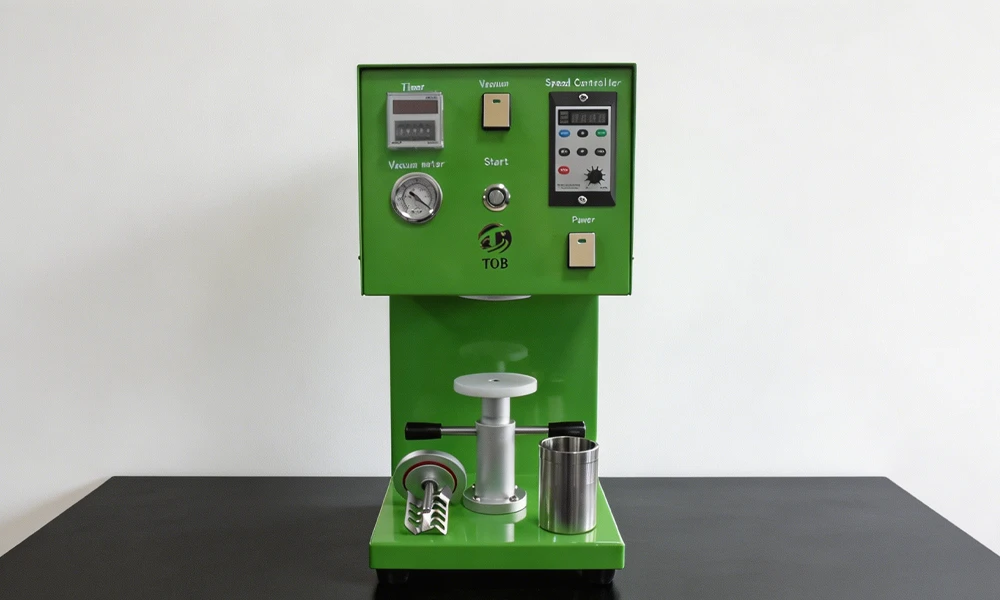
Mezclador planetario de vacío |
Capacidad de 50 a 500 ml, vacío hasta -0,09 MPa |
Las burbujas de aire atrapadas en la suspensión producen poros durante el recubrimiento. Esto da lugar a cortocircuitos internos. |
|
Medidor de viscosidad |
Rango de medición de 1 a 100 000 mPa·s |
La consistencia de la suspensión no se puede replicar entre lotes. Los datos de I+D dejan de ser comparables. |
Un agitador magnético estándar resulta insuficiente para la suspensión de baterías. El negro de humo y el PVDF forman aglomerados que una barra de agitación simplemente empuja en círculos sin romperlos. Las fuerzas de cizallamiento necesarias requieren un sistema de mezcla planetaria.
Caso de fallo documentado: Un laboratorio que utilizaba un agitador de placa calefactora para la preparación de la suspensión de NMC811 registró una desviación estándar de capacidad del 12% en 200 celdas. Se culpó al polvo del cátodo. La causa principal fue una dispersión inadecuada durante la mezcla. Reemplazar el agitador con un Mezclador planetario de vacío de laboratorio con capacidad de 100 a 500 mL. Esta capacidad resolvió la varianza en un solo lote.
2. Recubrimiento del electrodo: La uniformidad del espesor determina la capacidad.
El recubrimiento determina la capacidad superficial. Cuando la separación entre las cuchillas de recubrimiento varía en 10 μm, la carga de material activo varía aproximadamente un 8 %. Esto se traduce en una variación de 0,4 mAh en una pila de botón, cuyo objetivo es de 2,5 mAh.
Comparación de métodos de recubrimiento para laboratorios de I+D:
|
Método |
Rango de costos del equipo |
Uniformidad del espesor |
Aplicación apropiada |
|
Cuchilla dosificadora (manual) |
$200–500 |
±8% |
Solo análisis inicial del material |
|
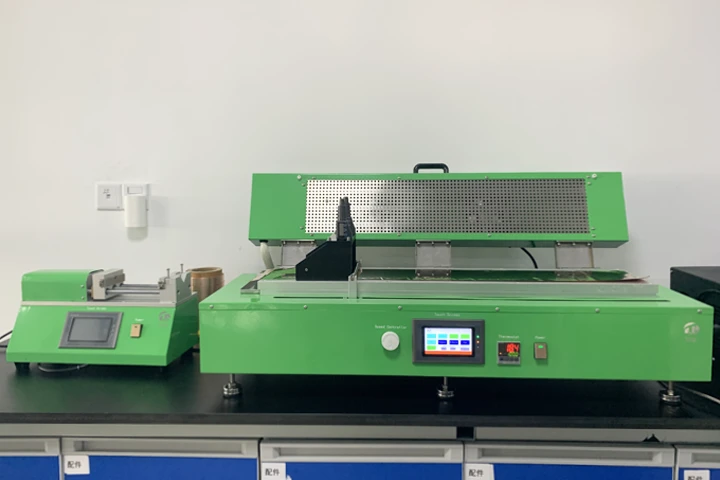
Recubridora de película con cama de vacío calefactada |
$3.000–8.000 |
±2% |
Investigación y desarrollo reproducibles, pruebas de semicélulas |
|
Recubridora de troqueles de ranura mini |
$15.000–30.000 |
±1,5% |
Desarrollo de procesos a escala piloto |
Para los laboratorios de I+D universitarios e industriales que fabrican pilas de botón, una máquina de recubrimiento de película con lecho calefactado y altura de cuchilla ajustable micrométricamente (rango de 0 a 5 mm, resolución de 1 μm) representa el equilibrio óptimo entre capacidad y coste.
Control de calidad crítico: El espesor del recubrimiento debe medirse en cinco puntos de cada electrodo. Si el espesor del borde supera una desviación del 5 % con respecto al centro, la cuchilla no es paralela al sustrato. Es necesario realizar un ajuste. Aceptar esta variación introduce un error sistemático en cada celda posterior.
Perspectiva de ingeniería: El adelgazamiento de los bordes en un electrodo de I+D de 50 mm de ancho puede parecer insignificante. Sin embargo, al aumentar el ancho de recubrimiento a 300 mm para la producción piloto, ese mismo defecto del 5 % en los bordes se convierte en una franja de desecho de 15 mm en ambos bordes. El rendimiento disminuye antes de que la línea piloto entre en funcionamiento. Equipo de recubrimiento de laboratorio con cabezales de cuchilla ajustables micrométricamente Además, se ha verificado un paralelismo inferior a 2 μm en todo el ancho del recubrimiento, lo que garantiza que los parámetros del proceso se transfieran directamente de la I+D a la escala piloto.
3. Secado de electrodos: La cinética de eliminación del disolvente es importante.
La velocidad de secado afecta directamente a la distribución del aglutinante. Cuando el disolvente se evapora demasiado rápido, el aglutinante de PVDF migra a la superficie del electrodo. El resultado es una capa rica en material activo en la interfaz del colector de corriente con una adhesión insuficiente, lo que provoca la delaminación.
Protocolo de secado estándar de I+D:
- 60–80 °C para suspensiones de NMC a base de NMP
- 80–100 °C para suspensiones acuosas de LFP
- Mínimo 4 horas, normalmente durante la noche, al vacío.
Un horno de secado al vacío con una estabilidad de temperatura de ±1 °C es un requisito indispensable. Los hornos de laboratorio estándar con una variación térmica de ±10 °C producen electrodos con distribuciones de aglutinante inconsistentes que no se pueden detectar visualmente, pero que se manifiestan como una variación de capacidad durante el ciclado.
4. Calandrado de electrodos: Objetivos de densidad compactada
Los electrodos secados presentan porosidad. Un exceso de porosidad reduce la densidad de energía volumétrica y perjudica la conductividad electrónica. Una porosidad insuficiente impide una humectación adecuada del electrolito.
Objetivos de densidad compactada estándar de la industria:
- Cátodos de NMC: 2,8–3,4 g/cm³
- Ánodos de grafito: 1,4–1,6 g/cm³
- Cátodos de LFP: 2,2–2,6 g/cm³
A prensa de laminación de precisión El control de presión calibrado es obligatorio. Tanto la distancia entre los electrodos como la fuerza aplicada requieren control y repetibilidad.
Caso de fallo documentado: Una empresa emergente omitió por completo el proceso de calandrado durante la fase inicial de I+D, con la intención de "optimizarlo más adelante". Las pilas de botón ofrecían una capacidad un 40 % inferior a la teórica. El cátodo sin calandrar presentaba un volumen muerto que el electrolito llenaba sin acceder al material activo. Seis meses de reformulación del material no produjeron ninguna mejora, ya que la causa principal residía en la deficiencia del equipo, no en el material.
5. Perforación con electrodos: Eliminación de rebabas
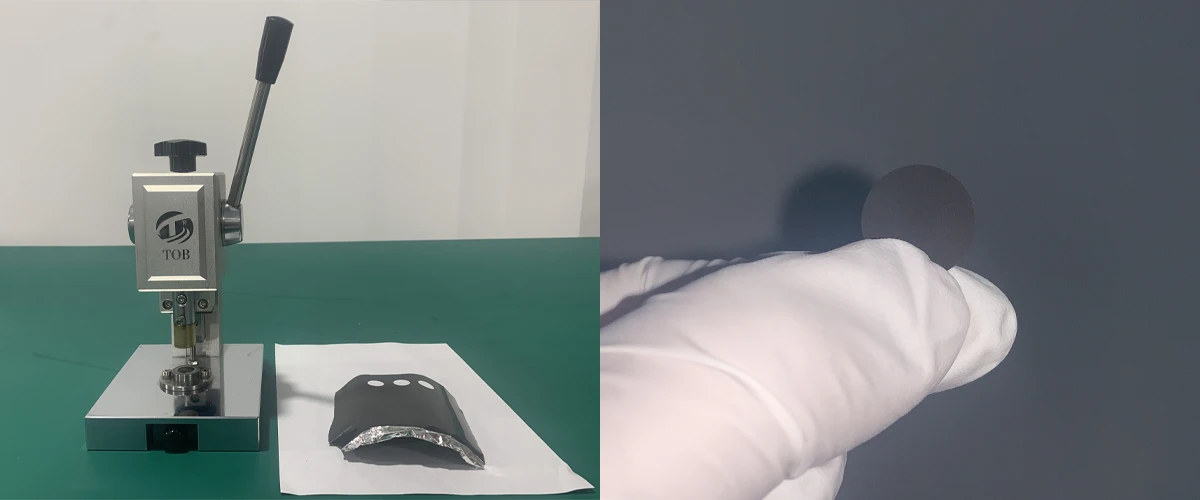
Los electrodos de las pilas de botón se perforan con diámetros de 14 a 16 mm. Una matriz de perforación desafilada o desalineada produce rebabas en los bordes. Estas rebabas penetran en el separador durante el engaste, creando microcortocircuitos que se manifiestan como un bajo voltaje en circuito abierto o una rápida autodescarga.
Requisitos de equipo: Punzonadora de precisión con matrices intercambiables (14 mm, 15 mm, 16 mm). Los electrodos perforados deben estar libres de rebabas bajo un aumento óptico de 10×. Las matrices requieren afilado o reemplazo periódico, un aspecto del mantenimiento que a menudo se pasa por alto en los laboratorios académicos.
6. Guantera: Especificaciones de control de atmósfera
El litio metálico reacciona con el agua. El electrolito reacciona con el agua. Cualquier entrada de humedad durante el ensamblaje de la celda la compromete irreversiblemente.
Especificaciones mínimas para la caja de guantes de I+D:
- O₂ < 0,1 ppm
- H₂O < 0,1 ppm
- Diseño de dos estaciones con antecámara
- Analizadores integrados de O₂/H₂O
- Sistema de purificación con capacidad de regeneración
Realidad presupuestaria: Un adecuado Grado de batería guantera Un sistema de purificación de gas con capacidad de regeneración suele costar entre 15.000 y 25.000 dólares. Las unidades de menor coste suelen requerir el reemplazo del cartucho de purificación cada 6 meses en lugar de cada 3 años, lo que anula el ahorro inicial debido al coste de los consumibles.
7. Ensamblaje de pila de botón: Precisión de la presión de engaste
El engaste es el paso mecánico final. La presión determina directamente la integridad del sello y el contacto interno.
Requisitos de presión de engaste CR2032: Entre 600 y 800 psi, calibrado según el material de la junta y la configuración de la celda específicos.
Comparación de tipos de prensa:
|
Tipo de pulsación |
Rango de precios |
Consistencia de la presión |
Mejor aplicación |
|
Prensa de crimpado manual |
$500–1000 |
±15% |
Formación inicial de bajo volumen |
|
Prensa de crimpado neumática |
$2.000–4.000 |
±3% |
Investigación y desarrollo regulares, >50 células/semana |
|
Engarzadora eléctrica con retroalimentación de presión |
$5.000–8.000 |
±1% |
Datos de calidad para publicación, cualificación para la ampliación de escala |
Para los laboratorios que producen más de 50 células por semana, una prensa neumática es el mínimo práctico. Para aquellos que publican datos revisados por pares o califican materiales para la ampliación a escala piloto, una engarzadora de pilas de botón eléctricas El registro digital de la presión proporciona la trazabilidad necesaria.
¿Listo para construir tu laboratorio? Un laboratorio de pilas de botón es un sistema integrado, no una colección de instrumentos individuales. Un componente con especificaciones deficientes —una engarzadora imprecisa, una caja de guantes con fugas de humedad, un mezclador incapaz de dispersar correctamente— y todo el proceso de I+D genera ruido en lugar de datos útiles. TOB New Energy suministra Equipo completo de laboratorio para pilas de botón proveedor de paquetes llave en mano A más de 2000 institutos de investigación y fabricantes de baterías en todo el mundo, con líneas de laboratorio preconfiguradas, instalación in situ y formación de operadores incluidas de serie.
Preguntas frecuentes (FAQ)
P: ¿Cuál es el equipo mínimo necesario para ensamblar una primera pila de botón?
A: Balanza de precisión, mezclador al vacío (o mortero y maja para las pruebas iniciales), recubridora con cuchilla dosificadora, horno de vacío, perforadora de electrodos, caja de guantes y prensa de engaste manual. Presupuesto: entre 20 000 y 30 000 dólares para una configuración básica funcional.
P: ¿Es necesario un horno de vacío para el secado de los electrodos, o basta con el secado al aire?
A: Es necesario un horno de vacío. El secado al aire en condiciones ambientales introduce humedad que degrada el rendimiento del electrolito. El secado al vacío a 60–100 °C bajo una presión de -0,08 MPa elimina el disolvente residual y la humedad adsorbida. Una pérdida de capacidad típica del 15–20 % cuando se omite este paso.
P: ¿Cuántas células por condición se requieren para obtener datos estadísticamente significativos?
A: Mínimo 5 células por condición; se prefieren 10. Los estudios publicados que utilizan n=3 suelen presentar problemas de replicación. En I+D industrial, se considera que menos de 8 células por conjunto de parámetros son insuficientes para la toma de decisiones sobre el proceso.
P: ¿Puede la misma caja de guantes servir tanto para la investigación con iones de sodio como con iones de litio?
R: No se recomienda. El sodio reacciona con la humedad de forma más violenta que el litio. A menos que se mantengan protocolos estrictos de descontaminación y segregación atmosférica entre los diferentes productos químicos, se recomienda encarecidamente el uso de cajas de guantes específicas para cada uno, a fin de prevenir la contaminación cruzada y los incidentes de seguridad.
Esta guía técnica fue preparada por el equipo de ingeniería de procesos en TOB Nueva Energía Fabricante directo de equipos completos para laboratorios de baterías, desde pilas de botón hasta baterías a escala piloto, con sede en Xiamen, China. Los equipos se diseñan, fabrican, prueban y envían desde una única fábrica: sin revendedores, intermediarios ni sobreprecios.
 suscribete a nosotros