Chinese
 English
 français
 Deutsch
 italiano
 português
 Nederlands
 日本語
 한국의




- Página de inicio
- >
- Noticias
- >
- Dry Electrode Revolution: Scaling Solvent-Free Manufacturing for Next-Gen Battery
Categorías
Productos calientes
Dry Electrode Revolution: Scaling Solvent-Free Manufacturing for Next-Gen Battery
Oct 20,2026XIAMEN, China — As the global energy transition places unprecedented demands on battery cell performance, manufacturing economics, and carbon footprint reduction, the international battery industry is reaching an engineering inflection point. Conventional wet slurry coating processes—which have anchored lithium-ion manufacturing for over three decades—are rapidly approaching their thermodynamic, economic, and environmental ceilings. In response, dry battery electrode (DBE) technology has emerged as one of the most consequential manufacturing breakthroughs of the decade.
Recognized by pioneering research consortia, global automotive manufacturers, and industrial initiatives supported by the U.S. Department of Energy as a pivotal pathway to sustainable battery production, solvent-free electrode processing completely redefines the front-end fabrication line. By eliminating the reliance on energy-intensive drying ovens and toxic organic solvents, dry electrode manufacturing unlocks transformative cost reductions while serving as the vital technological bridge to commercializing all-solid-state and next-generation high-energy cells.
The Industrial Urgency: Overcoming the Limitations of Wet Slurry Coating
To understand the transformative momentum behind dry electrode processing, one must examine the operational bottlenecks inherent to conventional wet slurry coating. In traditional manufacturing, active materials, conductive additives, and polymer binders (such as PVDF) are mixed with toxic, volatile organic solvents—predominantly N-Methyl-2-pyrrolidone (NMP) for cathodes or deionized water for anodes—to produce a pumpable liquid slurry.
While this slurry-based approach has facilitated gigawatt-hour scaling, it introduces massive structural inefficiencies:
- Capital and Energy Penalties: Once the wet slurry is cast onto current collector foils, the entire volume of solvent must be evaporated inside industrial drying ovens that often stretch 60 to 100 meters in length. Heating, circulating, and recovering NMP through specialized condenser systems accounts for an estimated 40% to 50% of the entire cell plant's energy consumption.
- Environmental and Regulatory Compliance: NMP is subject to tightening toxic chemical restrictions and REACH regulations across the European Union and North America. Constructing, operating, and maintaining hazardous chemical recovery systems imposes immense ongoing capital and compliance overhead on gigafactory operators.
- Physical Electrode Thickness Constraints: In wet slurry drying, solvent evaporates from the outer surface first. This phenomenon creates an upward capillary draw that pulls low-molecular-weight binder particles toward the top surface, resulting in binder migration. When attempting to coat thick, high-energy-density electrodes, binder depletion near the current collector leads to severe delamination, poor adhesion, and structural cracking during subsequent calendering.
By eliminating liquid solvents entirely from the formulation, dry electrode processing removes drying tunnels, cancels solvent distillation, and bypasses capillary-driven binder migration. This unlocks a radical restructuring of plant economics, allowing battery producers to slash equipment footprints and focus capital expenditure directly on active material throughput.
Why Dry Electrodes Are the Missing Link for Solid-State Batteries
Beyond solving the economic and environmental challenges of conventional lithium-ion batteries, dry electrode manufacturing is increasingly acknowledged as the indispensable technical prerequisite for all-solid-state batteries (ASSB).
The chemical architectures of high-performance solid-state systems—particularly sulfide- and halide-based solid electrolytes—exhibit extreme sensitivity to chemical solvents and trace moisture. When exposed to conventional polar organic solvents or water during wet slurry processing, sulfide electrolytes undergo violent decomposition, releasing toxic hydrogen sulfide gas (H2S) and degrading critical ionic conductivity networks. While specialized non-polar organic solvents can mitigate decomposition to a degree, their high boiling points make thorough drying exceptionally difficult, leaving destructive residual solvent molecules trapped within the dense electrode matrix.
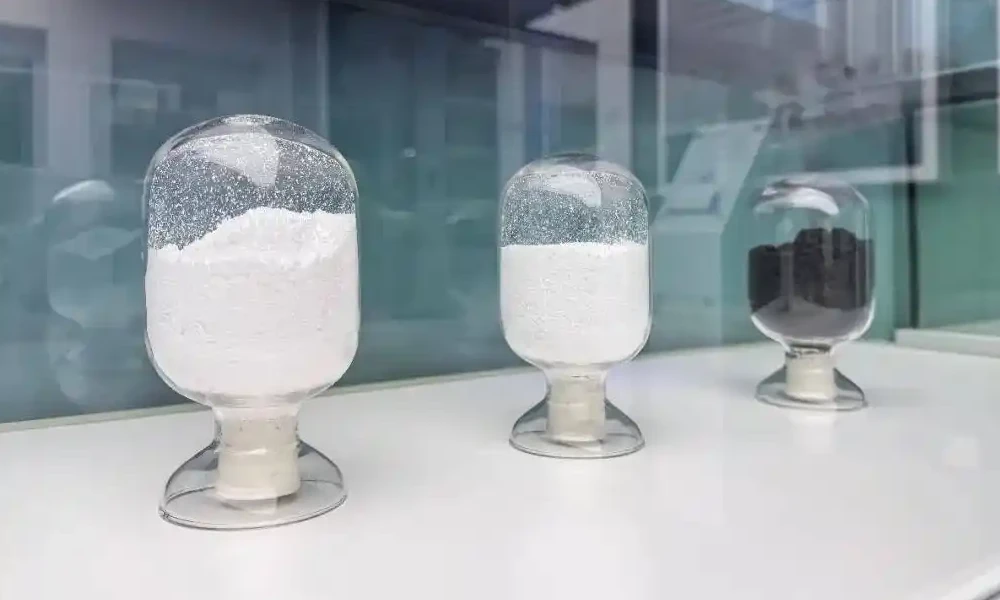
Furthermore, solid-state cells require intimate solid-to-solid physical contact between active cathode particles and solid electrolyte conductors to maintain viable lithium-ion transport pathways. Dry processing allows active materials, solid electrolyte powders, and elastomeric binders to be mechanically blended and dry-compacted into uniform, solvent-free composite membranes. When integrated into comprehensive solid-state battery equipment platforms, dry electrode technology eliminates parasitic solvent side reactions, avoids thermal degradation of fragile electrolyte crystallites, and produces free-standing electrode sheets optimized for high-pressure isostatic lamination.
The Four-Step Dry Process: From Powder to Free-Standing Film
Deploying dry electrode technology requires a departure from liquid dispersion dynamics, replacing wet fluid mechanics with precision powder metallurgy and mechanical fibrillation. To provide manufacturers and research institutes with an industrialized pathway, TOB NEW ENERGY has developed a systematic, end-to-end dry-process engineering methodology encompassing four interconnected stages:
1. High-Shear Solvent-Free Powder Mixing
Active materials, carbon conductive agents, and specialized fibrillatable binders (primarily polytetrafluoroethylene, or PTFE) are dosed in dry state without liquids. Utilizing high-speed shear mixing and precision temperature control, mechanical impact forces untangle the microscopic PTFE polymer chains, initiating a microscopic web-like network that encapsulates the active particles without clogging electrochemical active sites.
2. Free-Standing Film Forming
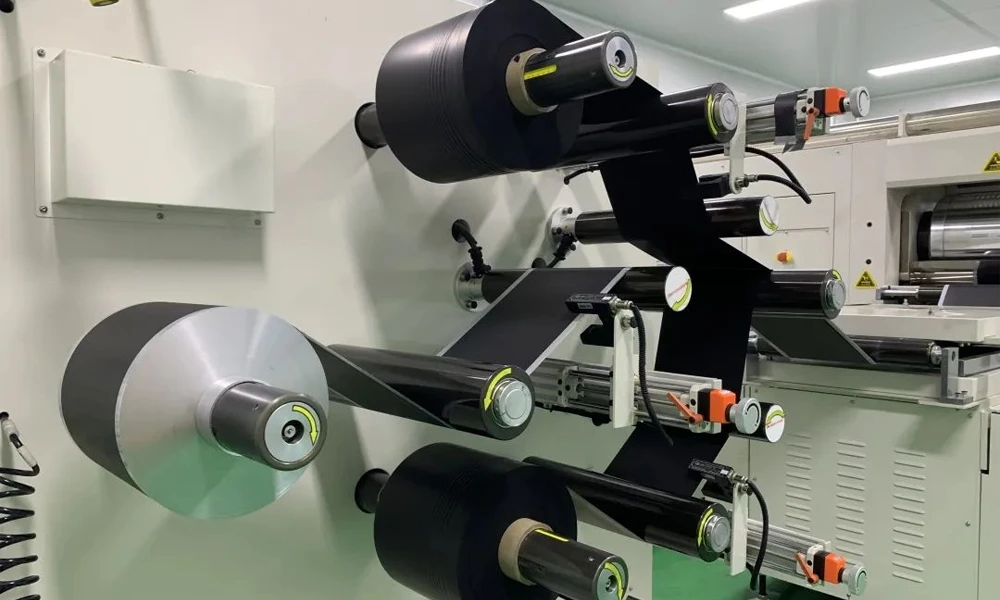
The pre-fibrillated dry powder compound is fed directly into a specialized roll-to-roll heated roller press. Under strict thermal regulation and continuous servo-driven line pressure, the PTFE fibrils deform plastically, locking the active materials into a continuous, flexible, and free-standing dry electrode film. Unlike brittle dried slurries, this self-supporting membrane possesses superior mechanical tensile strength and uniform density.
3. Precision Multi-Pass Thickness Calendering
Achieving exact electrochemical loading requires sub-micron thickness uniformity. The free-standing dry film traverses high-precision heated calendering rollers to reach the exact target thickness and porosity required by the cell specification. Because there is no solvent evaporation to leave empty voids, the resulting dry film achieves unprecedented packing density and cohesive particle contact.
4. Current Collector Lamination
In the final step, a ultra-thin layer of conductive adhesive primer is applied to the aluminum or copper current collector foil. The free-standing dry electrode film is simultaneously laminated onto the primed collector foil under synchronized thermal compression, yielding a finished, robust dry electrode coil ready for precision slitting and cell winding or stacking.
Manufacturers seeking turnkey implementation can leverage TOB NEW ENERGY's dedicated dry electrode film solutions, which provide the complete processing sequence from lab formulation to continuous roll-to-roll pilot validation.
Engineering Precision: Key Equipment Across the Dry Electrode Chain
The transition to solvent-free electrode manufacturing shifts the engineering burden directly onto mechanical precision and roll engineering. In a wet coater, fluid self-leveling can mask minor roll imperfections; in dry processing, any micro-scale mechanical runout transfers directly into film thickness deviation or tearing.
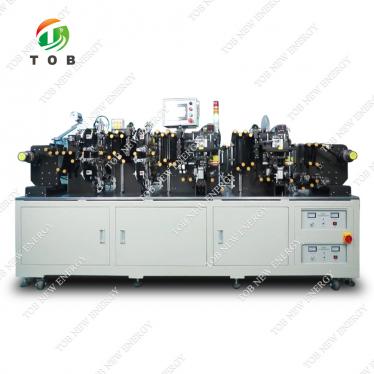
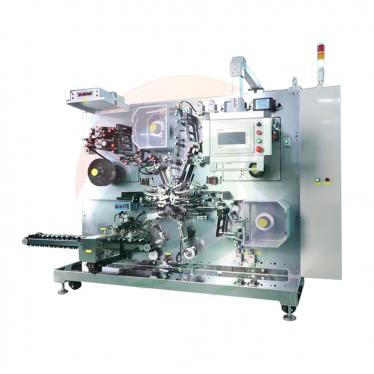
To solve this challenge, TOB NEW ENERGY delivers specialized machinery purpose-built for the rigors of dry powder processing, forming the vanguard of its modern electrode preparation equipment portfolio:
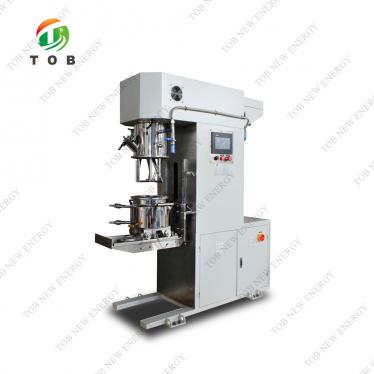
- Laboratory Jet Mills for Dry Electrode Powder (TOB-MQ-series): Utilizing compressed inert gas or air, supersonic spiral airflow accelerates particles into tangential collisions within the grinding chamber. This ensures ultra-fine particle deagglomeration and uniform dispersion of active particles and fibrous binders without thermal degradation.
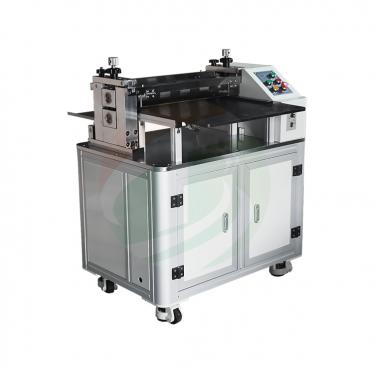
- Servo-Driven Heated Roller Presses (TOB-HRPE200-3AL Series): Engineered specifically for continuous dry film forming, these high-stiffness calenders feature high-hardness chrome-plated alloy rollers (HRC62) capable of operating at temperatures up to 150°C. With roll surface cylindricity calibrated to within ±2 µm and servo-controlled continuous gap adjustment from 0 to 2 mm, they provide the rigid stability needed to form continuous free-standing films without micro-cracks.
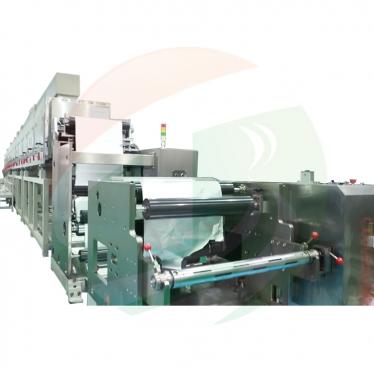
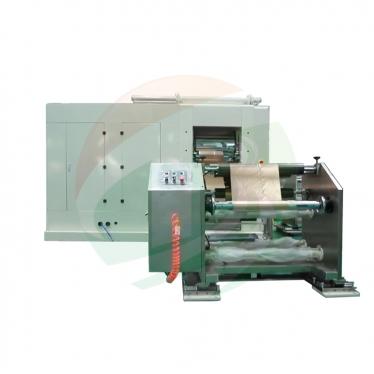
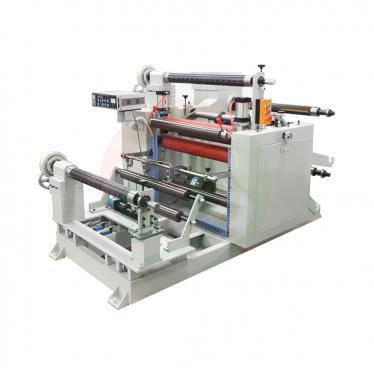
- Continuous Film Rolling and Lamination Units (TOB-DRP-Series): Integrating precision tension control, hot-roller lamination, and automated edge trimming, these systems ensure seamless composite bonding between free-standing dry films and primed metal foils at commercial pilot speeds.
- Inert Atmosphere Integration: For air-sensitive sulfide solid-state chemistries, TOB dry equipment integrates directly with custom multi-station glove box systems, maintaining dew points below -60°C to protect hygroscopic materials throughout powder handling and film rolling.
Decarbonizing Battery Gigafactories: Economic and Environmental Returns
As global markets enforce stringent life-cycle carbon footprint disclosures under frameworks such as the European Union Battery Regulation, dry battery electrode processing delivers measurable economic and environmental returns that transform gigafactory competitiveness:
- Up to 40% Reduction in Equipment CAPEX: By completely removing the 100-meter drying ovens, solvent recovery distillation towers, explosion-proof ventilation infrastructure, and NMP storage tanks, plant developers substantially reduce initial equipment purchasing costs.
- Over 60% Reduction in Factory Floor Space: The footprint dedicated to electrode coating and drying shrinks dramatically, cutting industrial real estate investment and civil engineering expenditures.
- 25% to 45% Decrease in Operating Energy: Bypassing high-temperature hot-air circulation and solvent condensation leads directly to multi-megawatt operational savings, significantly reducing the carbon intensity (kg CO2 eq/kWh) of every produced cell.
- Enhanced Cell Electrochemical Performance: Without binder migration defects, dry electrodes achieve superior adhesion strength, lower direct-current internal resistance (DCIR), and outstanding capacity retention under fast-charging conditions. Furthermore, the absence of solvent-induced micro-pores enables the fabrication of ultra-thick electrodes exceeding 100 mg/cm² areal loading, significantly boosting cell volumetric energy density.
About TOB NEW ENERGY
XIAMEN TOB NEW ENERGY TECHNOLOGY CO., LTD. (TOB NEW ENERGY) is a leading global high-tech engineering enterprise committed to advancing clean energy manufacturing. Founded in 2012 by battery technology pioneers active in the industry since 2002, the company provides comprehensive equipment, advanced process technologies, and turnkey engineering solutions for lithium-ion batteries, sodium-ion batteries, solid-state batteries, and supercapacitors.
With federal trademark registration granted by the United States Patent and Trademark Office (Reg. No. 8,350,946) and an ISO9001-certified operational base, TOB NEW ENERGY has delivered over 200 successful turnkey projects and equipped more than 8,000 customers across Europe, North America, the Asia-Pacific, and global emerging markets. From benchtop research instruments to GWh-scale automated production lines, TOB NEW ENERGY empowers clean technology innovators worldwide.
Contact & Technical Consultation
Amy Wang
Email: tob.amy@tobmachine.com
Phone / WhatsApp: +86-18120715609
Official Website: https://www.tobmachine.com/
 suscribete a nosotros